Call us today on 0800 861 1100
We are open Monday to Thursday 9am to 5pm

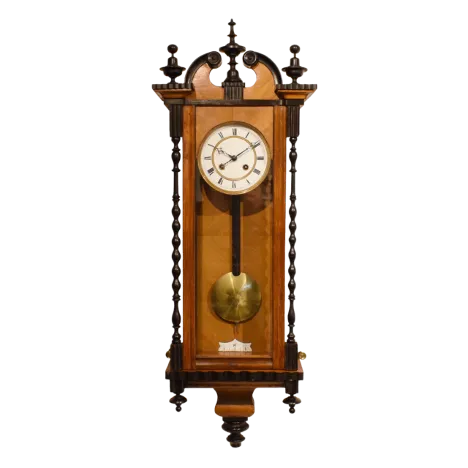
Antique Wall Clocks Striking

Winding

Usually once a week in a clockwise direction. Twice a week for count wheel clocks to ensure strike continuity. Carefully wind the clock gradually until the resistance builds and stop.

Hand Setting

The minute hand should only be moved forwards, never backwards, allowing the clock to complete its striking in each half hour and hour.

Regulation (Time keeping/running speed)

This is done by the nut on the bottom of the pendulum. Often at the pendulum bob is a collar with a V notch in it, make sure the bob is always sitting correctly in the notch. If there are two nuts under this, then one is used to tighten the bottom nut against it. Turn the nut to the right (clockwise) to go faster and to the left (anti clockwise) to go slower. The shorter a pendulum is the faster the clock goes. To slow a clock down, make the pendulum longer by adjusting the ‘rating’ nut below the pendulum. Just one revolution in the required direction per day and always reset the hands to time. Patiance is required to achieve results do not rush the process.

Putting your clock into beat (even tick)

This must be even in order that the clock continues to function. Swing the pendulum gently and listen – if you are not sure whether it is even or not try moving one side of the case to the left slightly and listen to see what that sounds like if the tick sound more uneven stop and move to the right. Moving the clock a millimetre or two can make the difference to your clock running and ticking evenly or not. Some clocks swing to the side when the door is open to wind, it helps putting blue tack at the rear of the clock case to hold it steady and stop it slipping. This also helps when putting into beat you can slide the clock to the correct position and hold in place by bedding in the blue tack.

Maintenance

To maintain the clock you should have it checked and serviced every 4-5 years. Do not attempt to oil a clock yourself. This should be done by a qualified repairer. Over-oiling a clock can affect the running and condition of the clock.

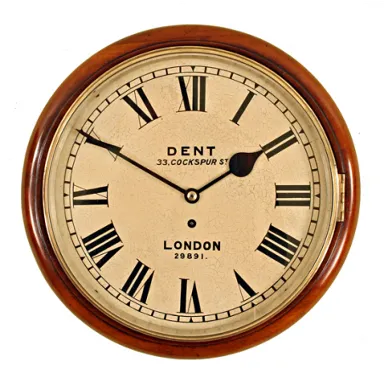
French Mantle Clocks

Pendulum removal and refitting whenever you move a clock, remove the pendulum first. Identify the suspension type from your clock, either spring or silk.

If the clock strikes on a gong, leave it in place. If it strikes on a bell, remove the bell nut and bell first.

For spring suspension clocks, lift the pendulum hook off the bottom of the suspension spring. Move it clear of the crutch and carefully guide it around the hammer and bell stand or gong.

For silk suspension clocks, lift the pendulum and unhook it from the silk. Slide the rod wire through the gap in the crutch fork.

To refit, reverse the process. With silk suspensions, do not pull down after hooking onto the silk as this can damage it and affect regulation. Ensure the suspension block sits correctly in the crutch fork.

Checking the tick once refitted, check the clock tick is even. Gently start the pendulum and listen. If unsure, slightly raise one side of the case and compare the sound.

If the tick is uneven:

– For spring suspensions, move the pendulum to one side and release. Let it settle for 30 seconds and recheck. – For both types, you can slightly adjust the case by loosening the rear screws and turning the dial or bezel. Retighten once correct. – If needed, carefully bend the crutch arm. Determine direction by raising one side of the case until the tick is even. If raising the right side fixes it, bend the crutch slightly to the right from the back, and vice versa.

Test and adjust gradually.

Ensure the pendulum does not catch on the case, bell or gong. Refit the bell and test the hammer. If the sound is dull, the hammer is too close. If silent, it is too far away. Adjust by repositioning the bell or gently bending the hammer arm.

Winding Wind weekly in a clockwise direction. For striking clocks, wind both arbours. Stop when resistance becomes firm. Always use a correctly fitting key.

Setting the time move the minute hand only. Always move forwards. Pause at each half hour and allow the clock to strike before continuing.

Strike Adjustment if the strike is out of sync, identify the mechanism:

– Rack striking: move the hour hand gently to match the strike. – Locking plate: lift and release the locking lever repeatedly until the strike matches the hands, then reset the time normally.

Regulation for spring suspensions:

– Adjust the pendulum bob. Raise it to make the clock gain time, lower it to make it lose time. – Fine adjustments can be made using the regulator at the 12 position on the dial. Turn left to slow, right to speed up.

For silk suspensions:

– Use only the dial regulator. Left slows, right speeds up. – Some clocks have a regulator on the back plate instead.

Platform Escapement Clocks (No Pendulum) These do not require levelling and will run in most positions. Winding and hand setting are similar, though some are adjusted from the rear.

Regulation is via a small lever marked F S or A R:

– F or A increases speed – S or R slows the clock

Make very small adjustments, around 0.5 mm at a time, and allow a day or two between changes.

Maintenance:  service your clock every 4 to 5 years. Do not oil it yourself. Incorrect lubrication can cause damage and affect performance. Always use a qualified horologist.

Antique Fusee Wall Clocks

Winding

Once a week in a clockwise direction, wind the clock gradually until the key comes to a stop.

Hand Setting

The minute hand should only be moved forwards and NEVER backwards.

Regulation (Time Keeping/Running Speed)

This is done by the nut on the bottom of the pendulum. Often at the pendulum bob is a collar with a V notch in it, if it has one make sure the bob is always sitting correctly in the notch. If there are two nuts under this, then one is used to tighten the bottom nut against it. Turn the nut to the right (clockwise) to go faster and to the left (anti clockwise) to go slower. The shorter a pendulum is the faster the clock goes. To slow a clock down, make the pendulum longer by adjusting the ‘rating’ nut below the pendulum. Just one revolution in the required direction per day and always reset the hands to time. Patience is required to achieve results, do not rush the process.

Putting your clock into beat (even tick)

This must be even in order that the clock continues to function. Swing the pendulum gently and listen – if you are not sure whether it is even or not try moving one side of the case to the left by pivoting on its mounting slightly and listen to see what that sounds like. If the tick sounds more uneven stop and move to the right. Moving the clock a millimetre or two can make the difference to your clock running and ticking evenly or not. Some clocks swing to the side when the door is open to wind, it helps putting blue tack at the rear of the clock case to hold it steady and stop it slipping. This also helps when putting into beat, you can slide the clock to the correct position and hold in place by bedding in the blue tack.

Maintenance

To maintain the clock you should have it checked and serviced every 4-5 years. Do not attempt to oil a clock yourself. This should be done by a qualified repairer. Over-oiling a clock can affect the running and condition of the clock.